
Artificial Urinary Sphincter
The artificial urinary sphincter (AUS) is an implantable device designed to restore urinary control in patients with severe urinary incontinence.
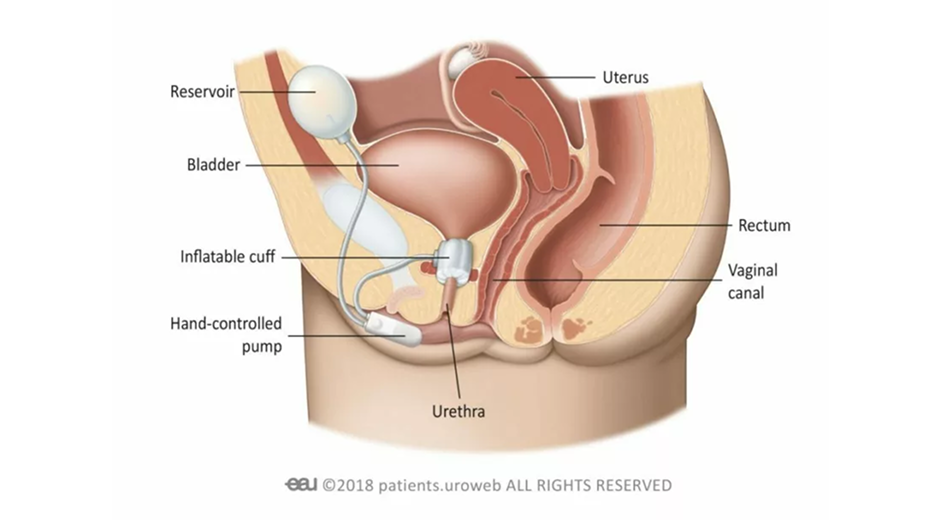
It consists of a hydraulic mechanism with three main components: a cuff that surrounds the urethra, a pump to activate the filling and emptying of the cuff, and a fluid reservoir.
The AUS mimics the function of the natural sphincter, allowing voluntary urine retention and release via a control pump located in the scrotum (for men) or the labia majora (for women).
This treatment is highly effective and is considered the reference option for severe urinary incontinence when other methods have failed.
What is it used for?
The artificial urinary sphincter is indicated for:
Post-prostatectomy urinary incontinence in men
- Patients who have lost urinary control after radical prostatectomy for prostate cancer or previous urethral surgeries.
Severe urinary incontinence in women
- Cases where slings or suburethral meshes have not been effective.
Sphincter dysfunction due to neurological diseases
- Patients with neurogenic bladder secondary to spinal cord injury, multiple sclerosis, or other conditions affecting natural sphincter function.
Main benefits
- Restores urinary control → Allows the patient to decide when to urinate by activating the device.
- High success rate → Over 80–90% of patients experience significant improvement in quality of life.
- Internal and discreet device → Not visible externally and easily activated via the control pump.
- Improves confidence and quality of life → Reduces dependence on pads or adult diapers.
- Long-term durability → Can function properly for more than 10 years with appropriate maintenance.
Special considerations
- Requires surgery for implantation → Although minimally invasive, a recovery period is necessary.
- Possible need for adjustments or replacement → Like any implantable device, it may require modifications or replacement over time.
- Postoperative adaptation period → Healing time is needed before use (approximately 6 weeks).
FAQ (Frequently Asked Questions)
Discover how UROCAT technology can improve your diagnosis and treatment. Consult with our specialists to receive a personalized approach and access the most advanced procedures in Urology.