
Intravesical Botulinum Toxin Injection
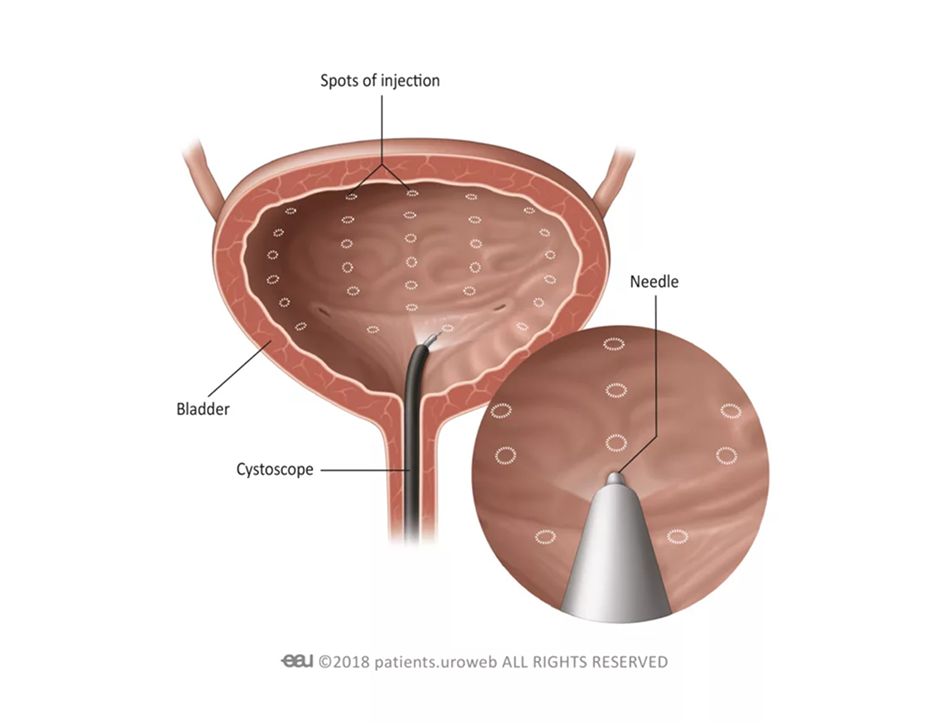
Intravesical botulinum toxin injection is a minimally invasive treatment that uses type A botulinum toxin (Botox® or other brands) to relax the bladder muscles, reducing detrusor overactivity.
Specifically, it works by blocking the release of acetylcholine at the neuromuscular junction, decreasing detrusor muscle contraction and reducing episodes of urgency and incontinence. This procedure is particularly useful for patients with overactive bladder resistant to oral medications or with neurogenic dysfunction.
What is it used for?
This technique is used in various urological conditions, including:
Idiopathic overactive bladder
- Patients with frequent and urgent need to urinate, with or without incontinence, when medications have not been effective.
Urinary incontinence due to detrusor overactivity
- Cases in which the bladder contracts involuntarily, causing urine leakage before reaching the toilet.
Neurogenic bladder
- Patients with spinal cord injury, multiple sclerosis, or neurological diseases affecting bladder control.
Main benefits
- Reduction of urgency and urinary frequency → Decreases the constant sensation of needing to urinate.
- Improved incontinence control → Helps prevent urine leakage, improving quality of life.
- Outpatient and minimally invasive procedure → Performed via cystoscopy without the need for surgery.
- Alternative for patients unresponsive to medications → May be a solution for those who cannot tolerate or do not benefit from other treatments.
- Prolonged effect → Benefits can last 6–12 months, reducing the need for continuous treatment.
Special considerations
- Temporary effect → Periodic reinjections may be required to maintain benefits.
- Possible temporary urinary retention → Some patients may require short-term self-catheterization to empty the bladder.
- Requires prior evaluation → Not all patients with overactive bladder are ideal candidates for this treatment.