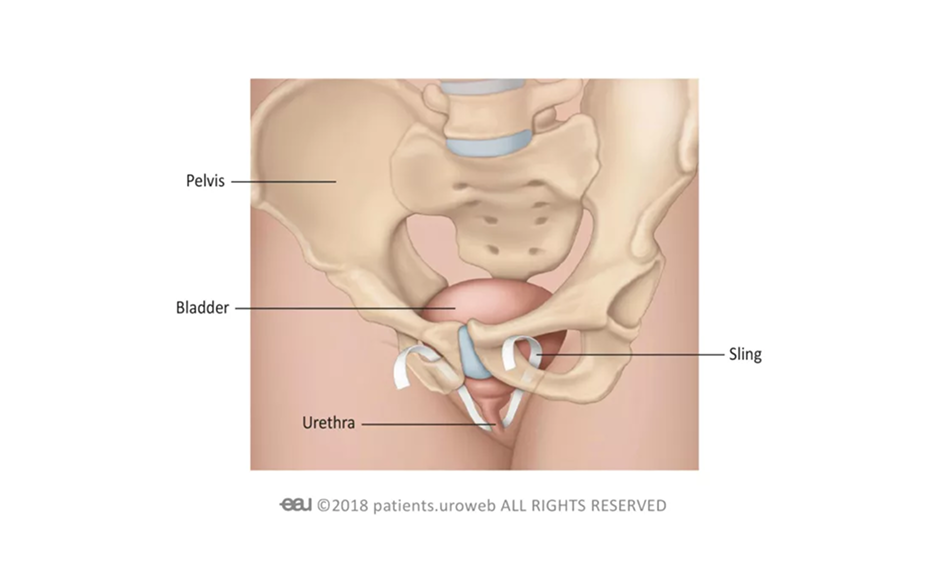
Suburethral slings or meshes are surgical devices designed to support the urethra and improve urinary control in patients with stress urinary incontinence (SUI). These bands of biocompatible material are placed under the urethra to restore its position and enhance the closure of the urinary sphincter during activities such as coughing, laughing, or lifting.
This procedure is minimally invasive, of short duration, and has a high long-term success rate.
Suburethral bands. Courtesy of eau.
What is it used for?
Suburethral slings are mainly indicated for:
Stress urinary incontinence in women
Caused by pelvic floor weakness, often due to pregnancy, vaginal delivery, or aging.
An option for patients whose pelvic floor rehabilitation has not been sufficient.
Urinary incontinence in men after prostate surgery
Patients who develop urinary incontinence after radical prostatectomy (prostate removal for cancer).
Used in mild to moderate cases, when an artificial urinary sphincter is not required.
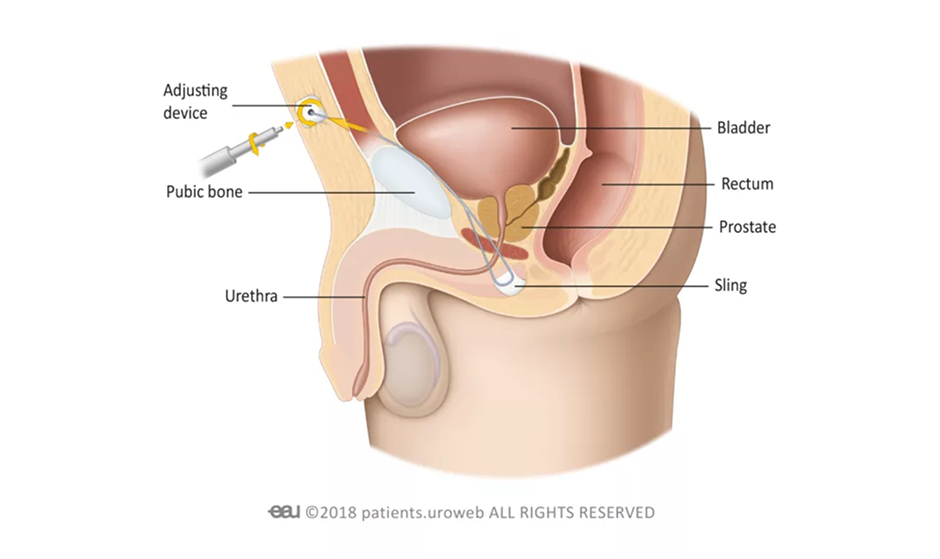
Men anti-incontinence mechanism. Courtesy of eau.
Main benefits
Minimally invasive procedure → Performed through a small incision, reducing the risk of complications.
High effectiveness → Most patients experience significant reduction or complete elimination of urinary leakage.
Fast recovery → Patients can usually resume normal activities within a few days.
Improved quality of life → Reduces the need for pads or absorbent products, increasing confidence and comfort.
Long-term durability → Results generally last many years without the need for reintervention.
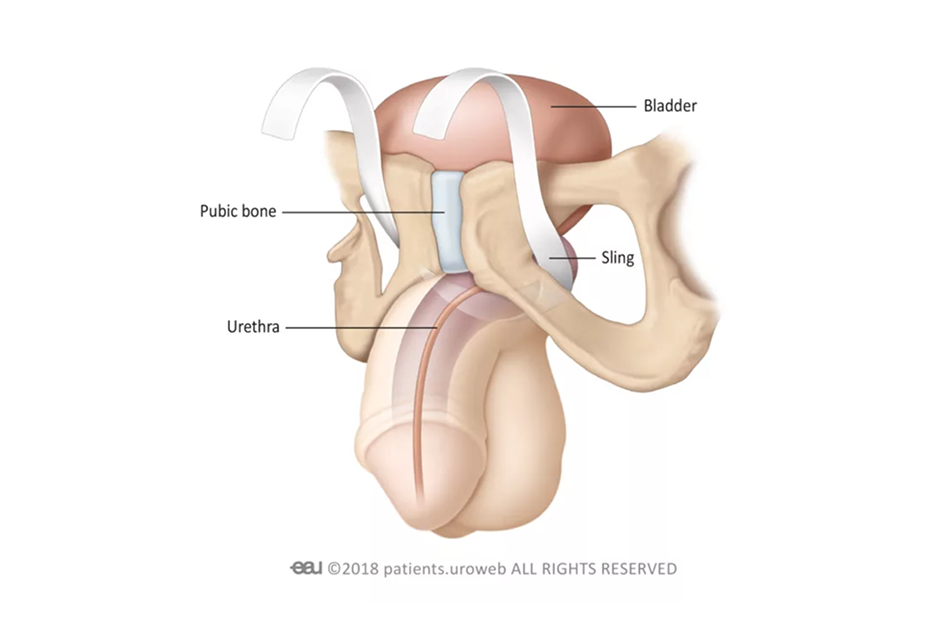
Suburethral bands. Courtesy of eau.
Special considerations
Not ideal for severe incontinence → In these cases, an artificial urinary sphincter may be necessary.
Possible minor complications → Some patients may experience temporary difficulty urinating or pelvic discomfort after surgery.
Postoperative follow-up necessary → To assess the functionality of the sling and rule out complications.
“I had laser surgery on my prostate, and honestly, everything went really well. I didn’t feel any pain at all, I went home soon afterward, and within a few days, I was back to my normal life. They treated me wonderfully. Very grateful.”
Manuel G. (62 years old)
★★★★★
“I’m very happy with the care I received. I had robotic surgery for prostate cancer and everything was perfect. At first, I was a bit apprehensive, but Dr. Esquena explained everything very clearly, reassured me, and the operation was a success.”
María L. (38 years old)
★★★★★
“I had a kidney stone, and they treated it with laser. Everything was quick and without any problems, and I felt much better straight away. Plus, the whole team is lovely. I’m very grateful.”
Carlos V. (49 years old)
★★★★★
“I had a private men’s health problem for a long time. I was embarrassed to talk about it. I went to UROCAT at my wife’s insistence, and the doctor made me feel comfortable from the start. He explained everything respectfully and helped me a lot. The treatment worked well, and today I’m fully recovered.”
Joan S. (52 years old)
★★★★★
“I went there for a urological problem and left feeling very reassured. They listened to me attentively and explained everything clearly. You can tell they care about their patients. I felt very well looked after.”
Mari Carmen M. (63 years old)
★★★★★
“UROCAT was recommended to me because I had a worsening urinary incontinence problem. I immediately felt I was in good hands. They solved it for me, and now I live a completely normal life.”
Your health
is our priority
Do you have questions about your urological health?
Schedule a consultation with our specialists and receive an accurate diagnosis and a treatment plan adapted to your needs.