
Overactive bladder
Overactive bladder (OAB) is a group of urinary storage symptoms characterized by a sudden, strong urge to urinate that is difficult to postpone.
This condition is common and can affect both men and women, particularly with aging. Although it is not life-threatening, it can significantly impact quality of life.
Source: European Association of Urology
Symptoms
The main symptoms of overactive bladder include:
- Urinary urgency: a sudden, intense need to urinate.
- Urinary frequency: urinating more than 8 times per day.
- Nocturia: waking up several times at night to urinate.
- Urgency incontinence: involuntary urine leakage immediately following the urge to urinate.
It should be noted that symptom severity varies, and not everyone experiences all these manifestations.
Diagnosis
The diagnosis of overactive bladder involves a detailed evaluation that may include:
- Medical history and physical examination: to assess symptoms and rule out other conditions.
- Urinalysis: to detect infections or blood in the urine.
- Bladder diary: recording the frequency and volume of urination over several days.
- Urodynamic studies: to evaluate bladder and urethral function.
Source: European Association of Urology
- Ultrasound: to visualize the bladder and kidneys.
These tests help identify the underlying cause of symptoms and determine the most appropriate treatment.
Treatment
Management of overactive bladder may include several strategies:
Self-care:
- Fluid intake modification: adjusting the type and amount of liquids consumed.
- Bladder training: scheduling specific intervals for urination and gradually increasing the time between voids.
- Pelvic floor exercises: strengthening the muscles that control urination. These measures are often the first step and can be effective for many individuals.
Pharmacological treatment:
- Muscarinic receptor antagonists: reduce abnormal bladder contractions.
- Beta-3 agonists: relax the bladder muscle to increase capacity.
- Desmopressin: decreases urine production, particularly helpful for nocturia.
The choice of medication depends on symptom profile and patient tolerance.
Second-line treatments:
- Botulinum toxin injections: reduce nerve activity responsible for OAB symptoms.
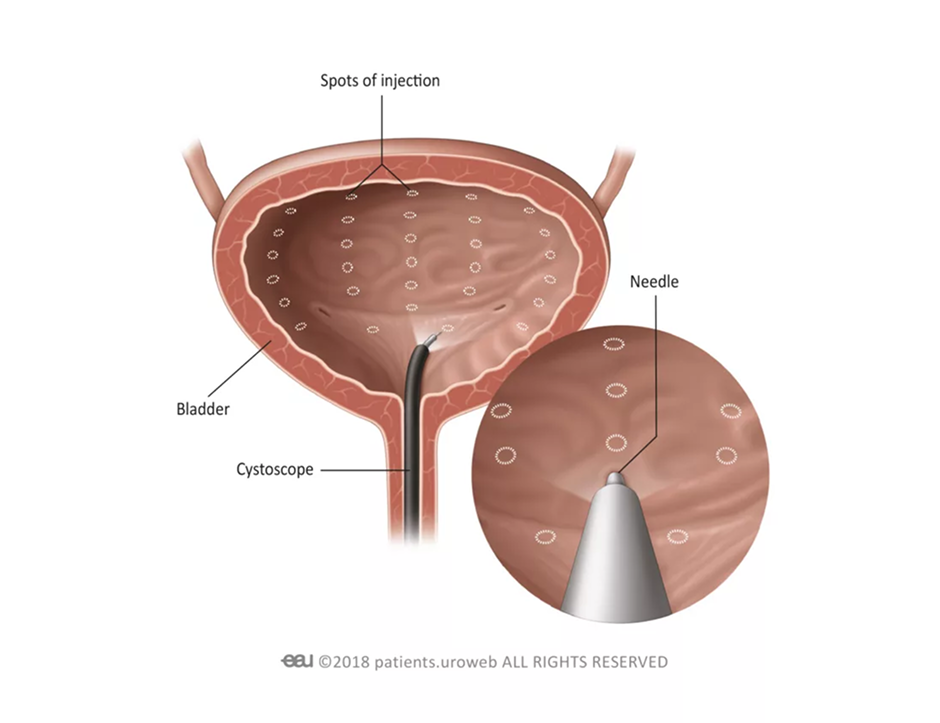
- Nerve stimulation (neuromodulation): uses electrical impulses to modify bladder control signals.
- Bladder augmentation surgery: considered for patients with very low bladder capacity.
These options are typically reserved for cases where first-line treatments are ineffective.
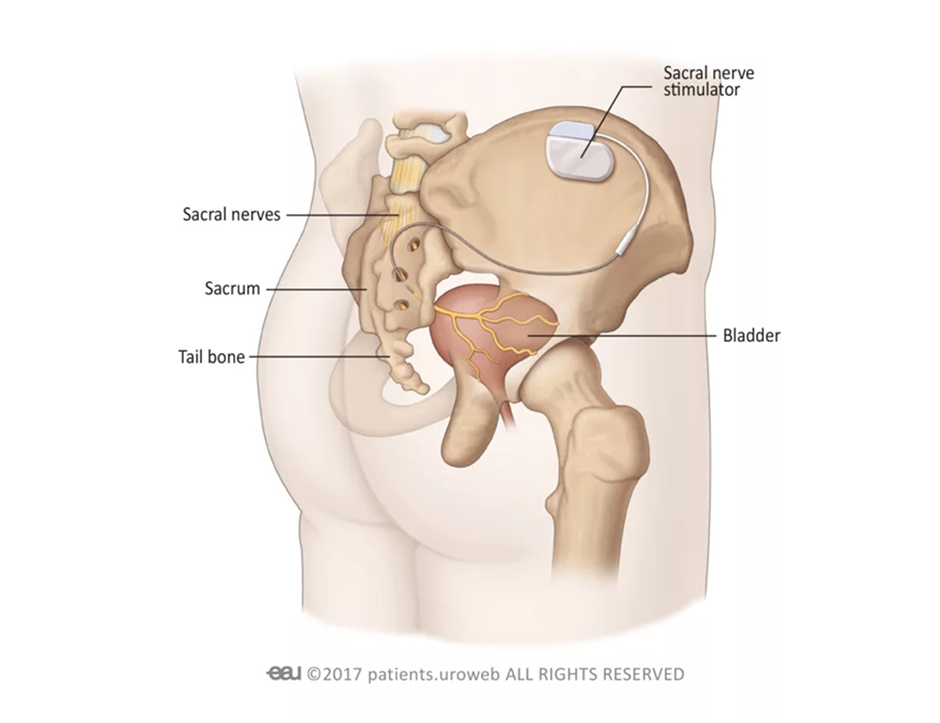
It is essential that treatment is personalized, taking into account the needs and preferences of each individual.
Self-care and management
In addition to medical treatments, the following strategies may help control symptoms:
- Dietary management: reducing caffeine, alcohol, and foods that may irritate the bladder.
- Weight control: maintaining a healthy weight to reduce pressure on the bladder.
- Use of absorbent products: when necessary, to manage urine leakage.
It is important to remember that while overactive bladder can be a chronic condition, there are multiple treatment and management strategies available to significantly improve quality of life. Consulting a healthcare professional is the first step to receiving an accurate diagnosis and a personalized treatment plan.