
Prostate Cancer
Currently, prostate cancer has become the most common tumor in men. In its early stages it is completely asymptomatic, which is why it is so important for all men to undergo preventive urological check-ups starting at age 45–50. When diagnosed at an early stage, the cure rate is very high.
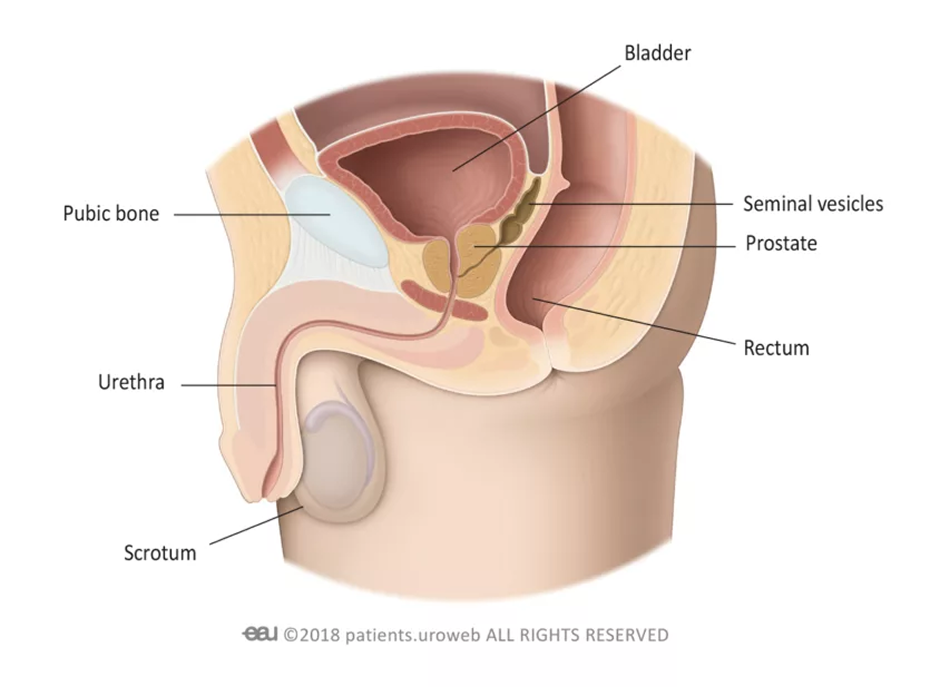
The prostate is a gland of the male reproductive system that produces part of the seminal fluid. In this disease, prostate cells begin to grow uncontrollably.
Symptoms
- Prostate cancer is asymptomatic in its early stages. As it progresses, symptoms may appear such as blood in semen or urine, increasing difficulty urinating, or urinary retention. In more advanced stages, it can cause pain in the lower back, hips, or thighs, or even kidney failure.
Diagnosis
The following tests are used to diagnose prostate cancer:
- Prostate-Specific Antigen (PSA): PSA is a protein produced by the prostate that can be detected with a simple blood test, without the need for fasting. Elevated levels may suggest the disease and lead to further diagnostic testing.
- Digital Rectal Exam (DRE): a physical examination where the doctor palpates the prostate to detect abnormalities.
- Genetic blood tests in order to determine the risk or aggressiveness of prostate cancer.
- Multiparametric MRI: very useful in cases of elevated PSA and/or abnormal DRE. Provides highly detailed images of the prostate and classifies cancer risk based on the observed lesions and their location, helping determine if a biopsy is necessary.
- Prostate Biopsy: under anesthesia, multiple tissue samples are taken from the prostate for microscopic analysis and pathological diagnosis.
-
CT scan (computed tomography) used to assess the spread of high-risk cancers.
- Nuclear medicine tests such as bone scintigraphy to evaluate cancer spread in high-risk cases, or PSMA-PET scan, a next-generation test that allows more effective and accurate staging, especially in high-risk tumors or recurrences after initial treatment.
Treatment
Treatment options depend on the stage at which the cancer is diagnosed, the general condition of the patient, their age, and personal preferences. Main alternatives include:
- Active surveillance: regular monitoring of the cancer in men under 80–85 years, without immediate treatment. Recommended only in low-risk cases. If cancer progresses during follow-up, curative treatment will be proposed.
- Focal therapy: treatment option for selected cases with single, small, well-localized, low-risk lesions. It allows treating only the tumor lesion with different energy modalities, preserving the rest of the prostate and avoiding the risks of urinary incontinence and erectile dysfunction.
- Surgery: radical prostatectomy to remove the prostate and seminal vesicles. It can be performed laparoscopically or robot-assisted, with high cure rates and, in expert hands, minimal risk of incontinence and impotence.
Source: European Association of Urology
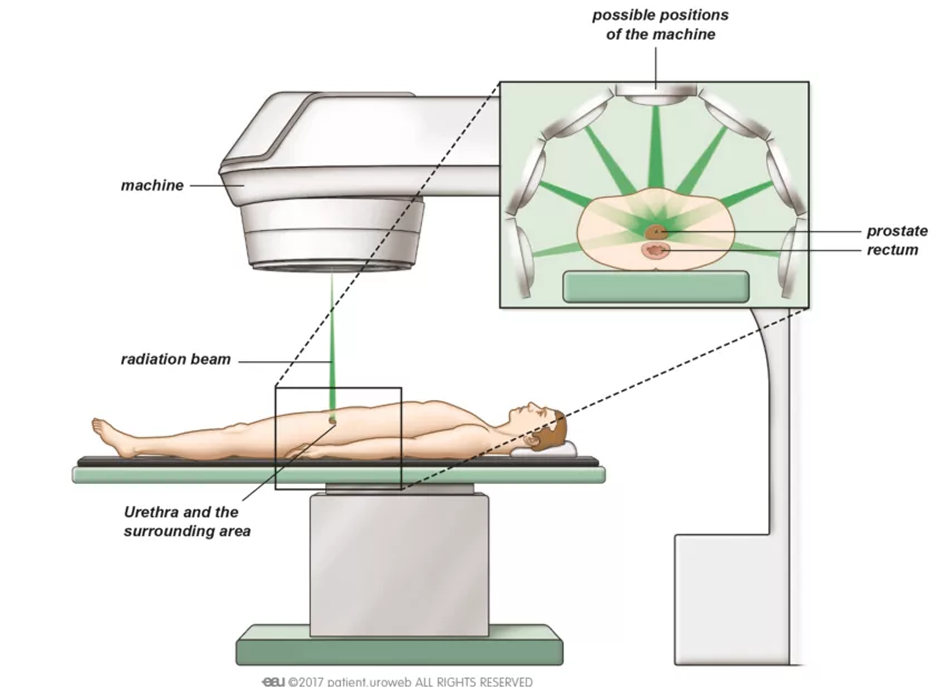
- Radiotherapy: use of radiation to eliminate cancer cells. Includes brachytherapy, which consists of placing radioactive seeds inside the prostate, allowing radiation to be administered in a more focused manner and with less effect on healthy tissues.
- Hormone therapy: use of different drugs that act at various points to block male hormones, slowing or stopping the growth of cancer.
- Chemotherapy: drugs that destroy cancer cells, generally used in advanced stages.