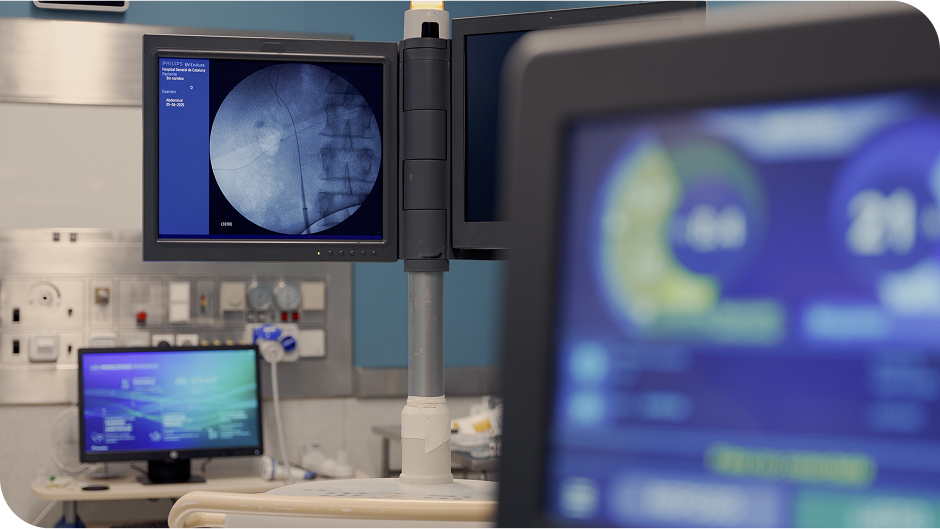
At UROCAT we incorporate the most advanced technologies in the diagnosis and treatment of urological diseases.
Thanks to high-precision and minimally invasive techniques, we achieve more accurate diagnoses, improve the safety of procedures, reduce recovery times, optimize results, and allow our patients access to cutting-edge therapies with minimal impact on quality of life.
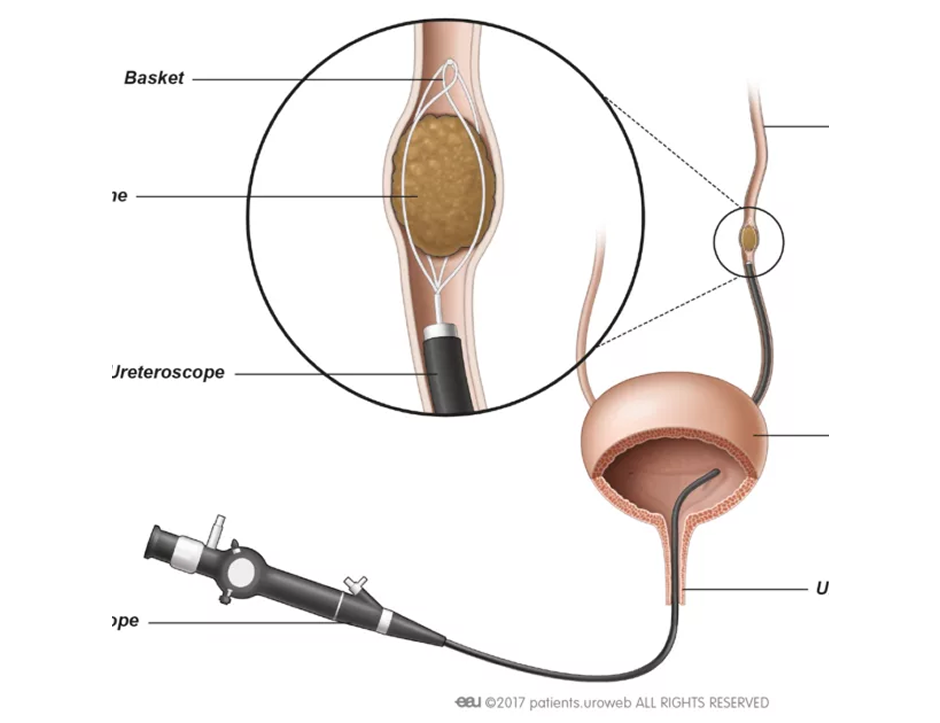
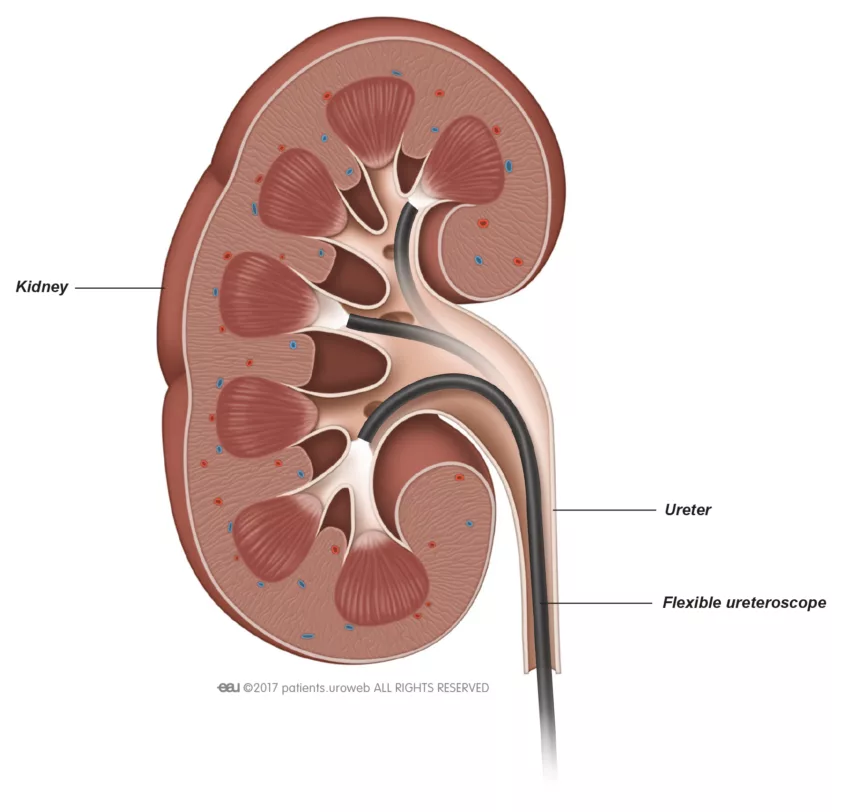
Semirigid and flexible ureteroscopy (RIRS – Retrograde Intrarenal Surgery) is a minimally invasive technique used for the treatment of urinary stones in the ureter and kidney.
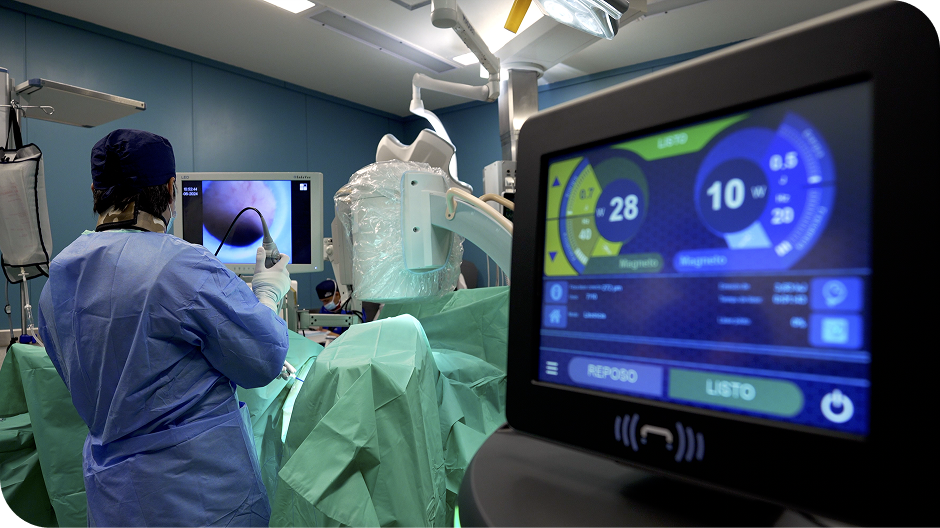
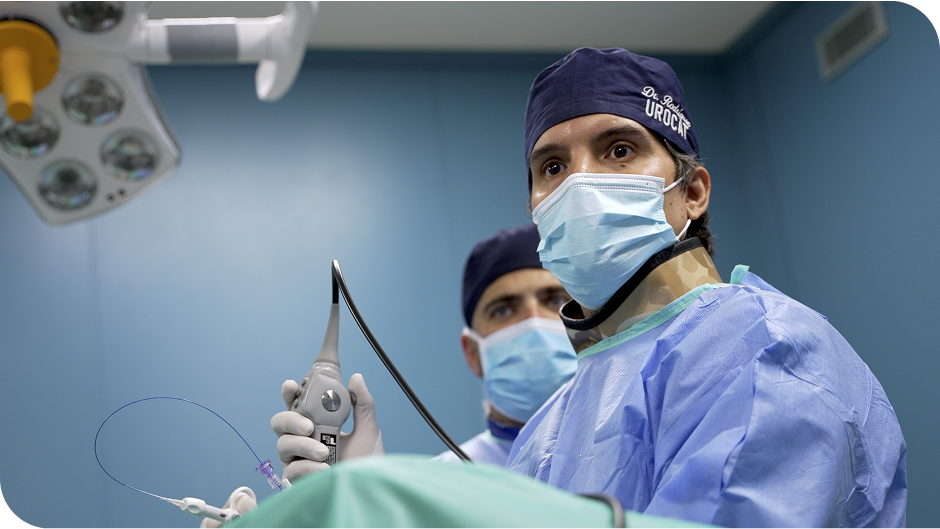
The procedure involves introducing a ureteroscope, a thin and flexible instrument that allows access to the urinary tract without the need for incisions. With the aid of a Holmium laser, the stones are fragmented into tiny particles, making their elimination through urine easier.
Flexible ureteroscopy. Courtesy of eau
Source: European Association of Urology
Flexible ureteroscopy. Courtesy of eau
What is it used for?
Semirigid and flexible ureteroscopy is the first-line treatment in:
Ureteral stones (upper, middle, or lower) that cannot be expelled spontaneously.
Small to medium kidney stones (up to 2 cm) located in the renal calyces.
Patients in whom extracorporeal shock wave lithotripsy (ESWL) has not been effective.
Stones in kidneys with complex anatomy or difficult access, where other methods may not be viable.
Patients with recurrent stone formation, allowing repeated minimally invasive treatments without open surgery.
Main benefits
Minimally invasive procedure → Performed without incisions, accessing the
High success rate → Allows for stone removal in a single session in most cases.
Less pain and faster recovery → Most patients can resume normal activities within a few days.
“I had laser surgery on my prostate, and honestly, everything went really well. I didn’t feel any pain at all, I went home soon afterward, and within a few days, I was back to my normal life. They treated me wonderfully. Very grateful.”
Manuel G. (62 years old)
★★★★★
“I’m very happy with the care I received. I had robotic surgery for prostate cancer and everything was perfect. At first, I was a bit apprehensive, but Dr. Esquena explained everything very clearly, reassured me, and the operation was a success.”
María L. (38 years old)
★★★★★
“I had a kidney stone, and they treated it with laser. Everything was quick and without any problems, and I felt much better straight away. Plus, the whole team is lovely. I’m very grateful.”
Carlos V. (49 years old)
★★★★★
“I had a private men’s health problem for a long time. I was embarrassed to talk about it. I went to UROCAT at my wife’s insistence, and the doctor made me feel comfortable from the start. He explained everything respectfully and helped me a lot. The treatment worked well, and today I’m fully recovered.”
Joan S. (52 years old)
★★★★★
“I went there for a urological problem and left feeling very reassured. They listened to me attentively and explained everything clearly. You can tell they care about their patients. I felt very well looked after.”
Mari Carmen M. (63 years old)
★★★★★
“UROCAT was recommended to me because I had a worsening urinary incontinence problem. I immediately felt I was in good hands. They solved it for me, and now I live a completely normal life.”
Your health
is our priority
Do you have questions about your urological health?
Schedule a consultation with our specialists and receive an accurate diagnosis and a treatment plan adapted to your needs.