
Bladder Cancer
It originates when the cells of the urinary bladder begin to grow uncontrollably, forming a malignant tumor.
It is one of the most common urological cancers and the fourth most frequent cancer worldwide. It affects men more often than women. The main risk factor is smoking. A relationship has also been demonstrated with exposure to certain industrial chemical substances.
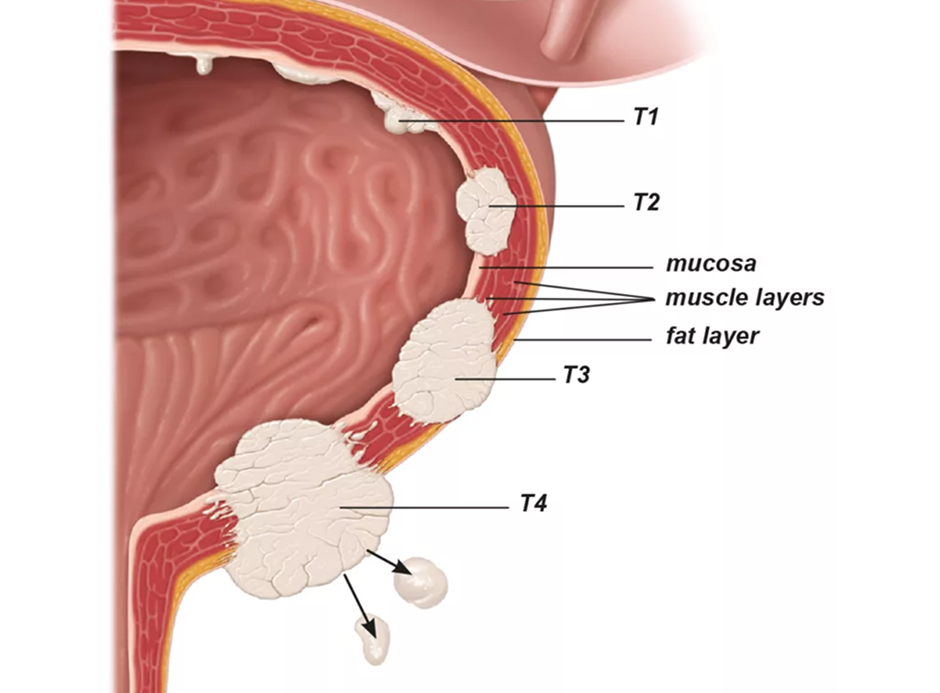
Symptoms
The most common symptoms of bladder cancer include:
- Hematuria (blood in the urine): it is the most common symptom and can be visible (gross hematuria) or detected only through a urine test (microscopic hematuria).
- Dysuria: pain or difficulty when urinating.
- Increased urinary frequency: need to urinate more often than usual, especially if it appears rapidly and progressively.
- Urinary urgency: sensation of an urgent need to urinate.
These symptoms are non-specific and may indicate other urological conditions, which is why consulting a urologist is essential for an accurate diagnosis.
Diagnosis
To diagnose bladder cancer, the following tests are used:
- Urine sediment analysis and urinary cytology: to detect the presence of blood or cancer cells in the urine.
- Ultrasound: the main initial screening test for bladder cancer, capable of diagnosing most tumors.
- Cystoscopy: a procedure in which a thin tube with a camera (cystoscope) is inserted through the urethra to visualize the inside of the bladder. It is useful both for diagnosis and for follow-up of tumors that have already been treated.
Source: European Association of Urology
- Biopsy: during cystoscopy, a tissue sample can be collected for microscopic and pathological analysis.
- Radiology: tests such as computed tomography (CT) or magnetic resonance imaging (MRI) to assess the extent of the tumor.
Treatment
Treatment options depend on the stage and grade of the cancer, as well as the patient’s general health status. The main alternatives include:
- Transurethral resection of the bladder (TURB): surgical procedure to remove superficial bladder tumors.
Source: European Association of Urology
- Intravesical immunotherapy or chemotherapy: once the tumor has been removed surgically, medications can be administered directly into the bladder to prevent recurrences and the development of new, more aggressive tumors in the future. Chemotherapeutic agents such as Mitomycin C can be used for low-risk tumors, or bacillus Calmette-Guérin (BCG), which is the standard treatment for high-risk non–muscle-invasive bladder cancer, as it stimulates the immune system to prevent the regrowth of cancer cells.
- Radical cystectomy: radical surgery to remove the entire bladder, indicated in cases where tumors invade the muscle layer of the bladder or are more advanced.
Source: European Association of Urology
Source: European Association of Urology
- Systemic chemotherapy: use of medications to destroy cancer cells throughout the body, especially if the cancer has spread.
- Radiotherapy: use of radiation to eliminate cancer cells, often in combination