
Kidney Cancer
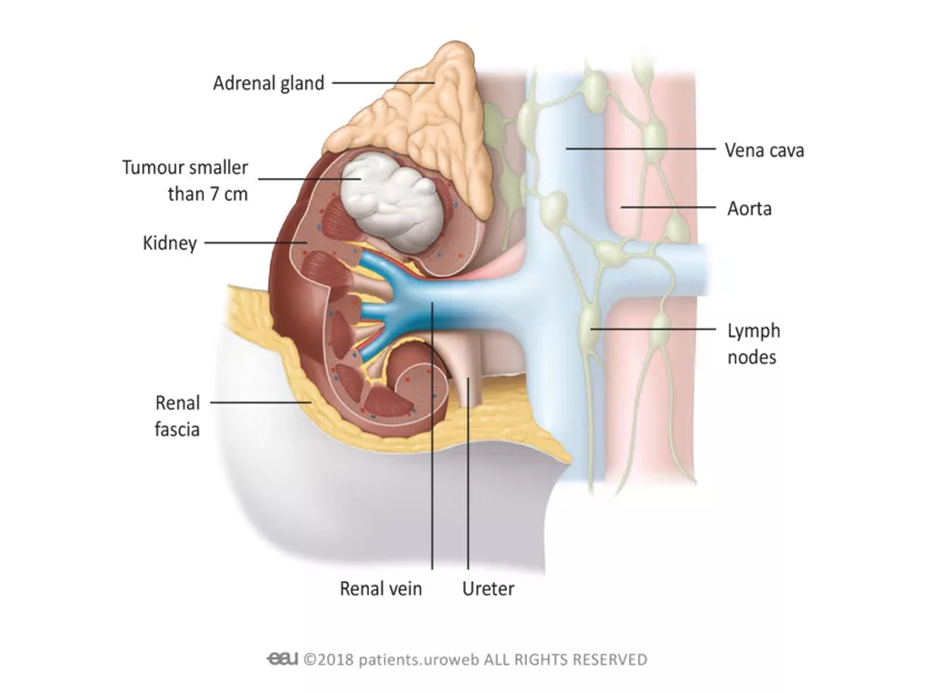
Kidney cancer is a malignant growth of cells in the kidneys. It is the fifth most common cancer in men worldwide. It is more frequent in men than in women, and most cases are diagnosed between the ages of 60 and 70.
Most cases are renal cell carcinomas. Thanks to the current routine use of imaging techniques such as ultrasound and computed tomography (CT), most cases are diagnosed incidentally during the investigation of other conditions, which allows many cases to be detected at very early stages, facilitating treatment and increasing the cure rate.
Symptoms
Although kidney cancer is usually asymptomatic in its early stages, approximately one in ten cases presents symptoms such as:
- Flank pain.
- Blood in the urine (hematuria).
These symptoms may indicate that the disease has progressed. In addition, some patients may experience paraneoplastic syndromes, which are the body’s reactions to cancer, such as:
- High blood pressure.
- Weight loss.
- Fever.
- Anemia.
- Loss of muscle mass.
- Loss of appetite.
- Alterations in liver enzymes and blood platelets may also be present. Bone pain or persistent cough may be signs of metastasis.
Diagnosis
Diagnosis of kidney cancer generally involves:
- Medical history and physical examination: assessment of medical history and symptoms.
- Imaging tests: CT and magnetic resonance imaging (MRI) are essential to determine the size of the tumor and its extension to the renal veins, lymph nodes, or neighboring organs.
- Blood and urine tests: to evaluate kidney function and detect abnormalities.
- Renal biopsy: although it is not common, in some selected cases it is indicated to determine the tumor subtype.
- These tests help establish the stage and subtype of the tumor, which is crucial for planning the appropriate treatment.
Treatment
Treatment options depend on the stage and extent of the cancer:
Localized kidney cancer
- Partial nephrectomy: removal of the tumor and a small portion of the surrounding tissue, preserving the rest of the kidney.
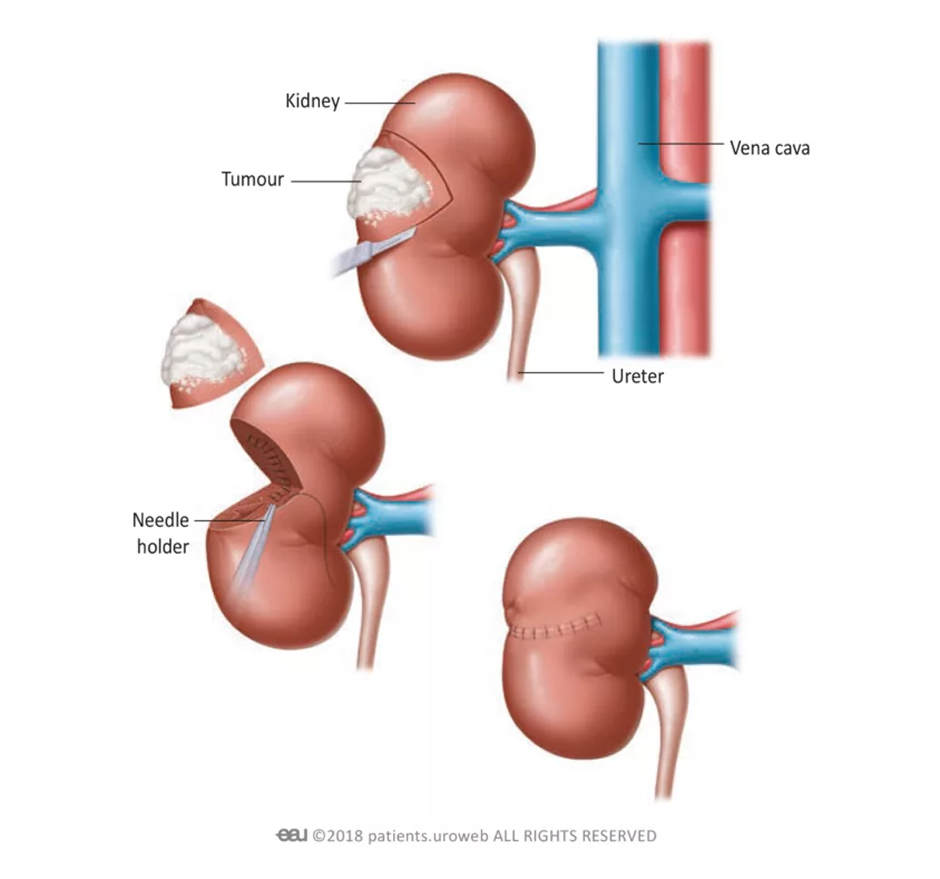
Source: European Association of Urology
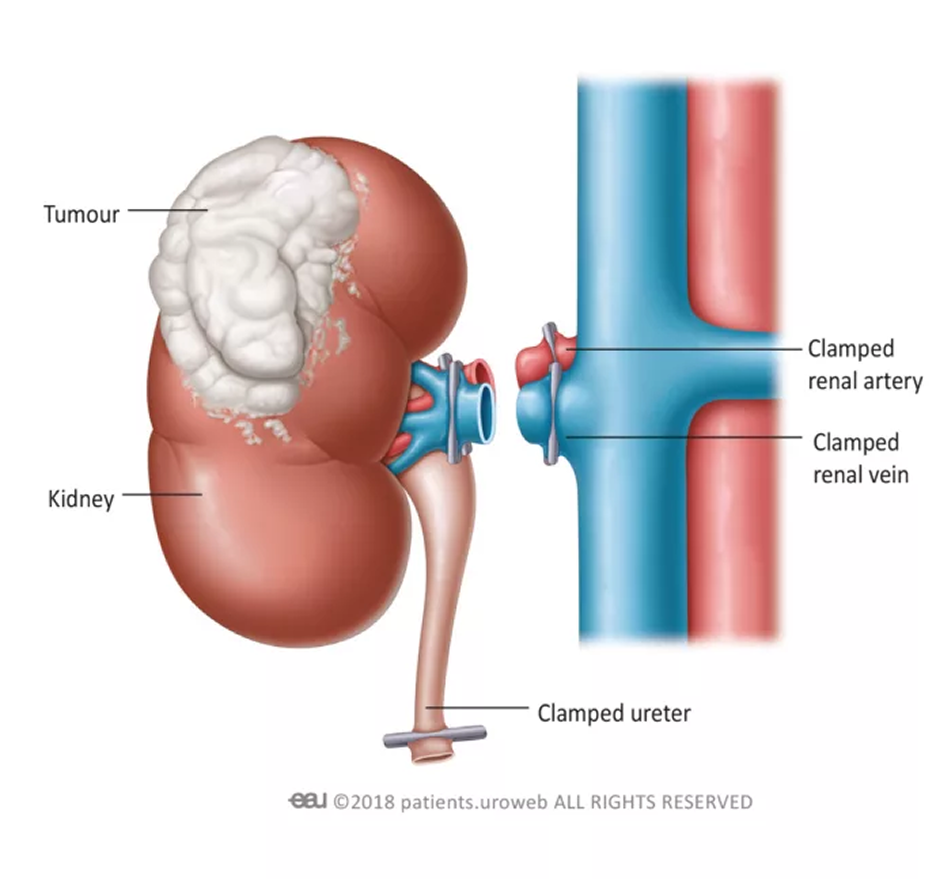
- Radical nephrectomy: complete removal of the affected kidney and, sometimes, adjacent tissues.
- Active surveillance: regular monitoring without immediate intervention, especially in small tumors or in patients with high surgical risk or very advanced age.
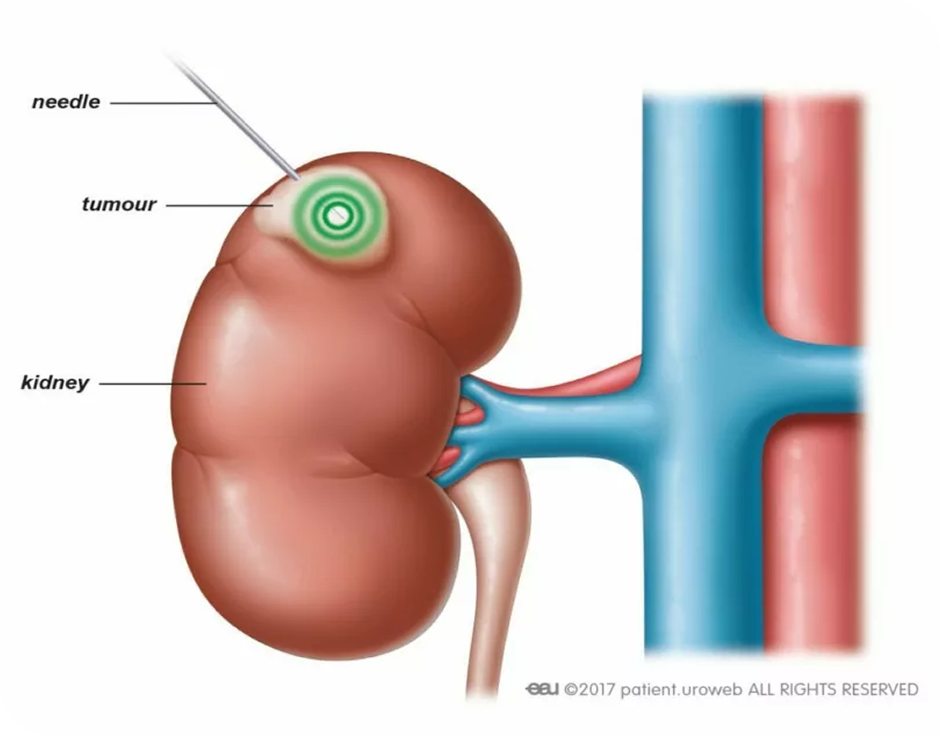
- Radiofrequency ablation or cryotherapy: minimally invasive techniques to destroy the tumor.
Locally advanced kidney cancer
- Radical nephrectomy: removal of the kidney and surrounding tissues.
- Embolization: a procedure to block the blood supply to the tumor when surgery is not feasible.
Metastatic Kidney Cancer:
- Debulking surgery: reducing the size of the primary tumor.
- Targeted therapies: antiangiogenic drugs that inhibit the growth of blood vessels that feed the tumor.
- Immunotherapy: stimulating the immune system to fight cancer.
- Radiation therapy: to relieve symptoms caused by local invasion or metastasis.
- The choice of treatment is based on the specific characteristics of the tumor and the patient’s overall health status.